A Gentle Guide to Flours, Stoneground Staples, and Bakes for Mums
I’d like to talk a little bit about flours. I’ll admit I hadn’t ever really given flour too much thought, I know about plain and self-raising, and this was the extent of my knowledge to be honest! I then delved in to using wholemeal flour as I understand this is better for us, but if I’m honest again, I didn’t really understand why. I just know I swapped all my plain flour out for wholemeal pretty blindly! Anyway, I thought I should probably dig a little deeper into flours and see if I was right to do this and what else really matters when it comes to flour. I won’t be discussing every type of flour available, I understand there are things like oat flour for example. I’m keeping this simple for the mums out there who need to know what bag of flour should they grab and keep in the pantry!
Stoneground vs. Industrial Roller Milling
One thing that caught my eye was the word stoneground! Now what does this mean, well apparently we have to look at how grain becomes flour in the first place, before we can drill down to flour types.
Standard Industrial Roller Milling is a process where quite simply, flour is made using high-speed steel rollers. The machines are very quick and hot and inevitably strip away the germ (containing Vitamin E and healthy fats) and the bran (the fibrous shell). Now, with wholemeal flour they do mix a portion of the brain back into the flour at the end, but, the heat sensitive vitamins are unfortunately already degraded at this point.
Stoneground Milling is a traditional way, where whole grains are essentially crushed between two heavy millstones. As these millstones turn slowly, little heat is generated and therefore the vitamins and healthy fats are preserved.
The Flour Directory: What’s Sitting in the Pantry?
Plain Flour (White) & Self-Raising White Flour
White flour is made from refined wheat, with the bran and germ removed entirely. Self-raising simply has an added baking agent (usually baking powder and a touch of salt) mixed in for a quick rise. Due to the fibre-rich bran being removed, plain white flour is essentially pure starch. This can lead to blood sugar spikes and drops in energy. Not something us mothers who are sleep deprived and lacking energy really need! White flour is not a bad thing. If you want to keep a bag and use it for toddler baking or birthday cakes, then go ahead! But if you are regularly reaching for plain flour, then maybe consider a wholemeal alternative.
Wholemeal Flour (Standard)
Flour containing the entire wheat kernel (bran, germ, and endosperm), typically reconstituted after industrial roller milling. This is a great upgrade from white flour, it retains the fibre, B vitamins, iron and magnesium. Fibre also helps stabilise our blood sugar and keeps us feeling satiated for longer, along with being extremely beneficial for our gut microbes.
Stoneground Wholemeal Plain Flour
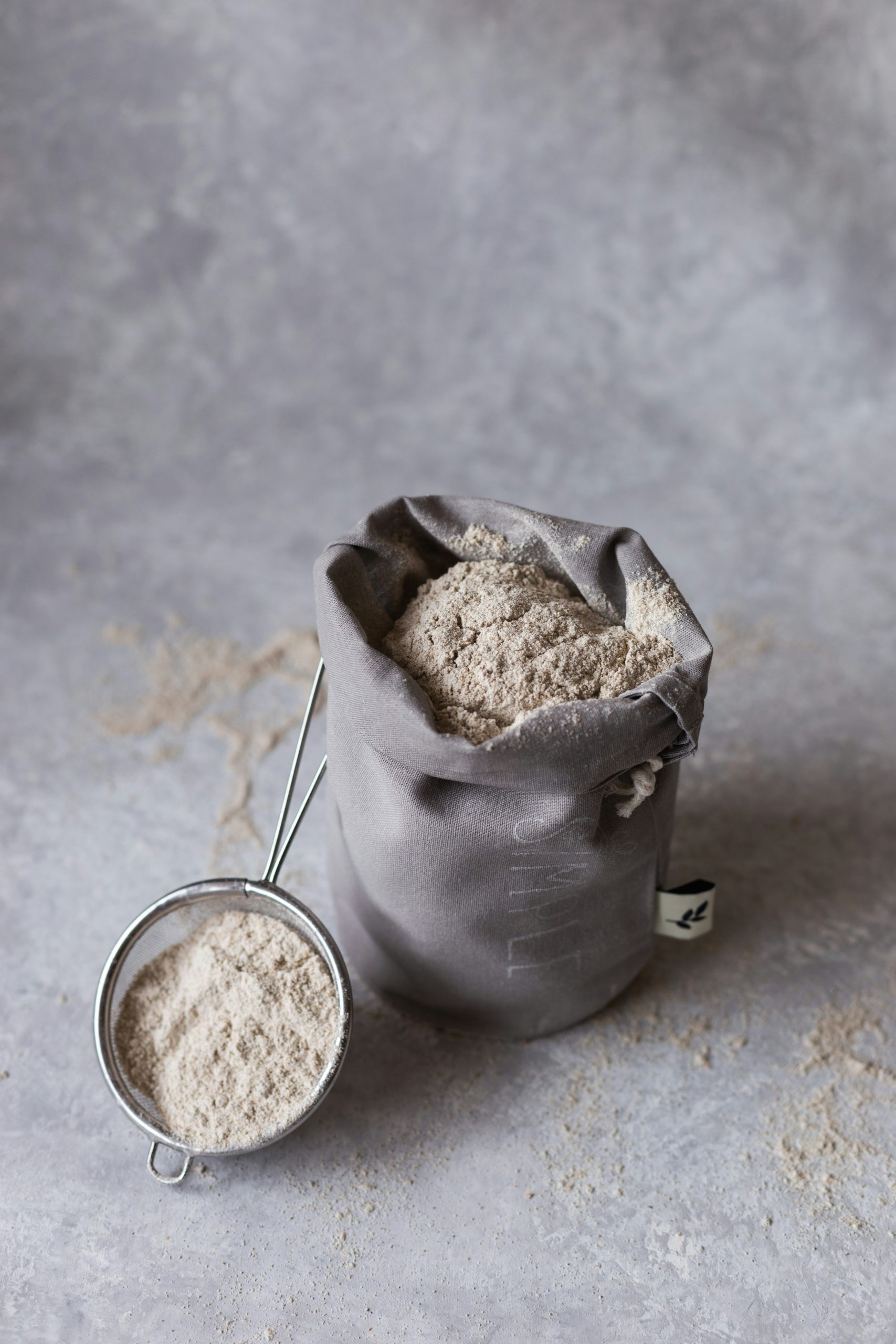
Whole wheat crushed slowly between natural millstones, keeping the natural germ oils, fibre, and nutrients together. If we were grading our flours, this would be the top flour to have. Due to the natural germ oil ground throughout the flour, it provides a broader spectrum of bioavailable minerals (like zinc and iron) and healthy fats. Pair this with the lack of intense heat from traditional roller milling, it provides a more complex energy so you won’t have the sharp peak and crash! Again, us mums need as much energy as we can get right!
Wholemeal Rye Flour
This was another flour that caught my eye, but I haven’t used yet myself. It’s flour milled from the whole rye grain rather than standard wheat. It turns out that rye is a powerhouse for maternal gut health. It is lower in gluten than standard wheat and very high in soluble fibre; beta-glucans and arabinoxylans. These essentially swell in the digestive tract, deeply satiating you and supporting smoother digestion, great for postpartum sluggishness or constipation.
The Takeaway
- Stoneground: Look for stoneground as your first choice for any flour.
- Wholemeal: Subsequently, try switching to Stoneground Wholemeal for your everyday bakes!
I can tell you that I have used Stoneground Wholemeal for pancakes, waffles, biscuits, cakes, pretty much everything. The only thing I would say, is it can cook a little dryer as to be expected with this type of flour. So consider adding something like a banana to your bakes 🙂
There is no right way to nourish your family, perfection isn’t possible and it’s unhealthy to try and attain this. It’s all about having the facts so you can make informed choices that fit your family, budget, time and the season of life you are in.
Stay Connected
Motherhood isn’t meant to be walked in isolation or dictated by endless algorithms. Step inside our private community forum to share whole-food recipes and chat with fellow mothers, or subscribe to our newsletter for gentle weekly essays.
Soleful Mother is entirely independent and ad-free. If these resources bring a bit of ease to your day, you are always welcome to buy me a coffee.
Legal, Nutritional & Paediatric Safety Disclaimer
General Information Only: The nutritional statistics, biochemistry notes, and dietary suggestions shared in this post are for educational, motivational, and informational purposes only. While I hold formal qualifications in health sciences and psychology, this information is not a substitute for professional medical advice, diagnosis, or treatment. Always consult with your GP, midwife, health visitor, or a registered dietitian before making significant changes to your or your child’s diet, especially during pregnancy, postpartum recovery, or extended breastfeeding.
Allergen Warning: Wheat and rye flours contain gluten, which is a known food allergen and sensitivity. If you are introducing gluten-containing grains to an infant or toddler for the first time, or if there is a family history of coeliac disease or severe allergies, please follow safe, gradual introduction guidelines as recommended by your healthcare provider.
Paediatric Feeding & Safety: When preparing baked goods, breads, or finger foods for young children or toddlers, ensure that items are cut, softened, and served in shapes and sizes appropriate for your child’s age and developmental stage to minimize choking hazards. Always supervise children during mealtimes.
Leave a Reply