Category: Barefoot Movement

  • The Footprints of Health

    The Footprints of Health

    I will be talking about:

    • Natural movement – walking barefoot
    • The cost of modern conveniences on our muscles
    • Lessons from Great Granny C
    • Reframing exercise

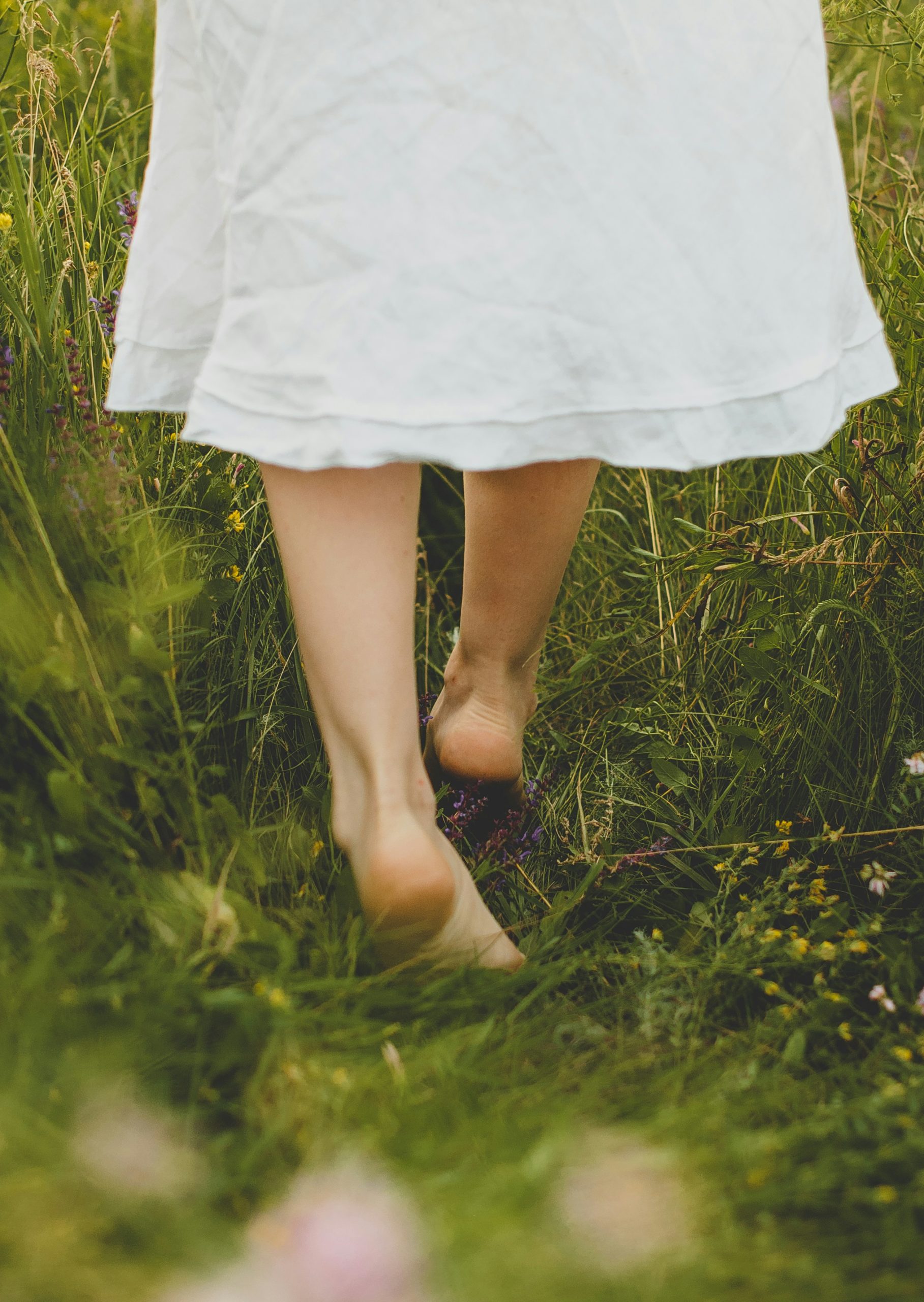
    My favourite form of natural movement is walking barefoot – or as close to as I can. When I’m at home I’m barefoot and when I go out I’m sporting a pair of Vivos. I moved to this brand back in April and simultaneously began wearing toe spacers and exercising my toes with basic toe lifting and spreading throughout the day. I mentioned this in an earlier Substack post.

    The move towards this was dictated by two things – one I had a bunion that was causing me great pain and two I had been reading what Dr Courtney Conley had to say on the matter. I can say that my feet are no longer in any pain and I have been slowly strengthening my foot muscles which I strongly believe has helped with my hip and low back pain. Since the improvements in my own aches and pains I have become very interested in the foot and more natural movements.

    Anyway, aside from my personal story on how I got to this place, I want to talk about the benefits of how many steps a day and my thoughts on an extension of this, beyond the feet and to life in the kitchen.

    What the Science Says About Daily Steps

    Studies from Shreeves reported that taking 9,000 steps a day is associated with a lower risk of cancer. The results are slightly different 11%-16% versus 18% in the newer study; with the 2023 study (which included 56% women!:)) associating a lower risk of 13 cancers including bladder, breast, colon, endometrial, esophageal, kidney, liver, lung and adneocarcinoma.

    Additionally, there are several studies supporting increasing your daily step count to help prevent muscle wastage (sarcopenia). The sweet point seems to be between 6,000-7,000 steps. 7,000-8,000 (Nakanojo), and a meta-review (Ding) reporting a finding of 7,000 steps lowering all-cause mortality by 47%. Which brings me nicely onto my latest thought…

    The Cost of Convenience

    Sarcopenia is a type of atrophy which is age related. However, atrophy is something that we can all be at risk of. I was thinking how convenient and instant our lives have become and how there are always gadgets to help us save time. However, I think these come at a cost. Some things are time saving but they are encouraging atrophy. We simply do not use our muscles like we used to, or like we are intended to.

    My first thought was the invention of the electric whisk, when we manually whisk an egg or cake mix for example instead of using an electric whisker we are standing for a start, using our forearm flexors and extensors, engaging wrist control and strength, and engaging the biceps, triceps and anterior deltoid. When we use an electric whisk we aren’t loading or strengthening these muscles. I’m not suggesting we will end up with atrophied muscles from using an electric whisk, but it’s a thought provoking point about how perhaps we should be more mindful of what we are outsourcing.

    Choosing manual kitchen tools forces our upper limbs, forearms, and deep core stabilizers to engage under low-level resistance. This functional loading patterns natural bone density and prevents premature upper-body muscle atrophy.

    The “Manual Kitchen Challenge”

    The very next time a recipe calls for mixing, whipping, or kneading, skip the electric stand mixer or plug-in hand whisk. Grab a traditional steel manual whisk or a solid wooden spoon instead, and reframe those 4 minutes of physical effort as an essential, protective movement snack that strengthens your physical body right where you stand.

    Get your kids involved! I find it slightly odd that we have encouraged children to play or entertain themselves whilst we cook and they’re hanging off our legs! I have a little kitchen tower and my little boy has always helped chopped the vegetables up for dinner, I give him a wooden chopping board, toddler friendly knives and away he goes chopping up green beans mostly. We have some music playing and it’s one of my favourite times of the day :).

    Lessons from Great Granny C

    It also made me think of my lovely Scottish grandmother in law, Great Granny C as we used to so fondly call her. She lived until the ripe old age of 89. She was an absolute powerhouse of a women. She did practically everything herself, she was always gardening and was even still cleaning her own wheelie bins out herself!

    She had such a positive can do attitude and was extremely active, very rarely sedentary unless she was enjoying reading a book or a crossword. It was similar with her cooking, wholesome home made food with some of her famous Scottish recipes including her famous hotpot, apple crumble and coffee buns.

    Enjoyed what you’ve read, consider subscribing for free, or supporting my work.

    Reframing Exercise for Busy Mothers

    I appreciate we are all time poor, but this also brings me to a reframe moment – what if, you didn’t NEED to go to the gym for an hour. We could reframe the simple swapping of an electric whisk for a manual one as exercise, this is a form of natural movement. The more of these swaps we make, the more natural movement we get in. I sometimes feel like I am being pressured into exercising ‘for my own health’ and this adds another impossible metric or target for me to hit, so I have found reframing these moments really helpful.

    And hey, if you love going to the gym go for it (it can have great social benefits, plus you get some time for yourself). This is simply a suggestion to those mothers who don’t have the time or money to go to a gym, who struggle to fit an hours workout in. Let’s reframe these natural movements as exercise. There is always a delicate balance with time and this suggestion won’t be for everyone. But I truly believe a reframe around what exercise is, can help.

    Stay Connected

    Motherhood isn’t meant to be walked in isolation or dictated by endless algorithms. Step inside our private community forum to share whole-food recipes and chat with fellow mothers, or subscribe to our newsletter for gentle weekly essays.

    Disclaimer: The information provided in this article, including thoughts on movement, daily steps, and physical activity in the kitchen, is for educational and informational purposes only. It is not intended as medical advice, diagnosis, or treatment. Every body is unique, and individual physical capabilities or health conditions vary. Always consult with a qualified healthcare professional, physical therapist, or doctor before making significant changes to your physical activity level, especially if you are managing pain, injury, or recovering postpartum.
  • From the Ground Up

    From the Ground Up

    Today, we are talking about feet.

    • My insight and experience of barefoot walking
    • Hip, back, foot pain and balance
    • A shoe test and foot strengthening exercise you can try at home!

    I think it is fair to say that modern footwear has become a real issue for a lot of our bodies. I know this firsthand because I actually deformed my own feet from years of wearing improper shoes. I developed bunions – one of which used to cause me immense pain. Today, however, that pain is completely gone, simply because I transitioned into minimal Vivobarefoot shoes, began wearing toe spacers, and started performing a basic foot strength routine daily.

    Leonardo da Vinci once said, “The human foot is a masterpiece of engineering and a work of art.”

    For most of my life, I never appreciated my own feet at all. In fact, I would have historically classed myself as quite sedentary. That all changed when I had my baby. As he grew into a very active toddler, I had no choice but to sink or swim in terms of my own physical fitness, balance, and strength!

    Before Shoes – Baby Feet

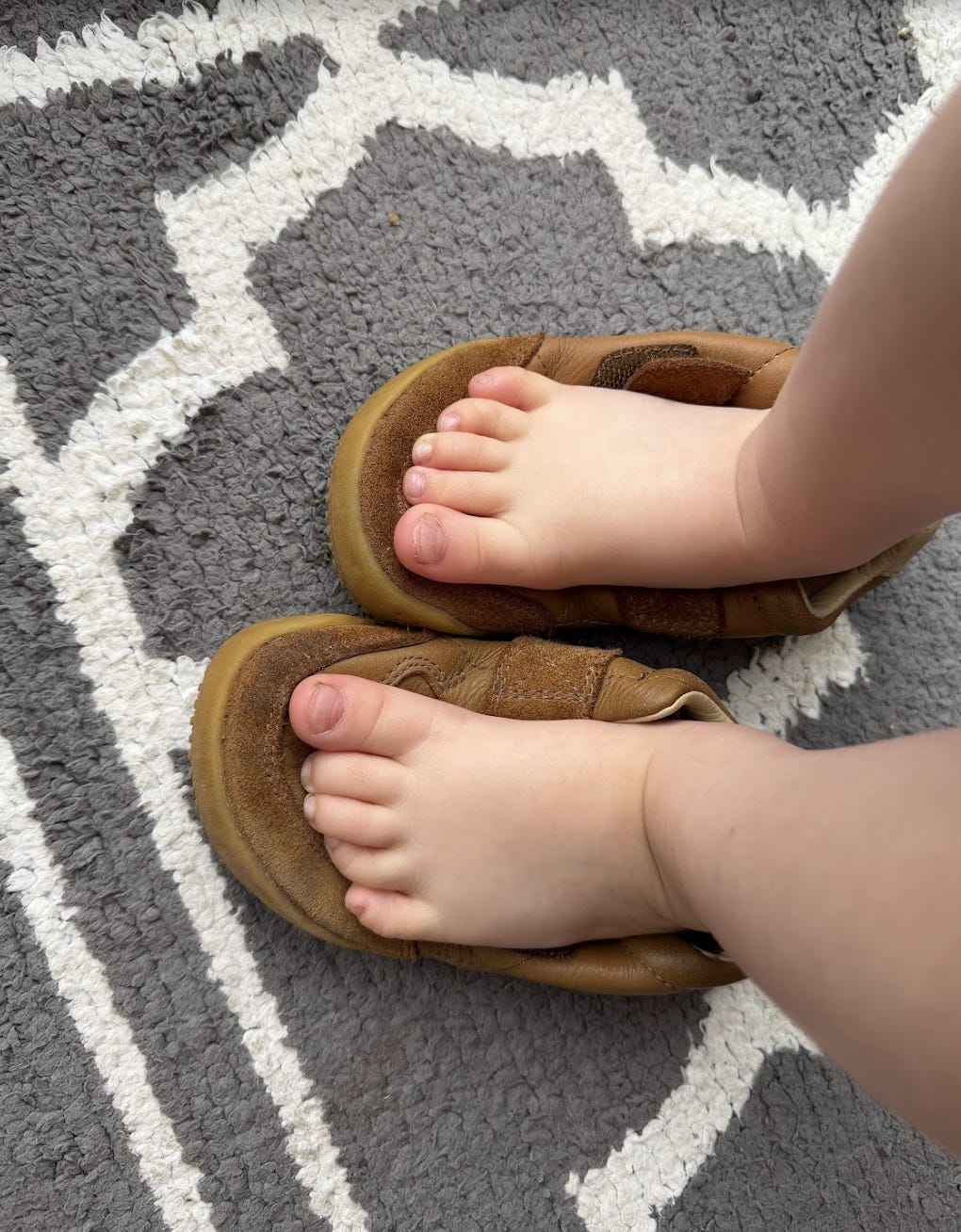
    To understand where we are going wrong, we need to go back to basics and look at the shape of a healthy human foot before shoes ever get involved. If you have a baby or a non-walking toddler, take a close look at their feet. I have become completely fascinated by my toddler’s cheesy, delicious little feet and how absolutely perfect they are. There are no structural lumps or bumps; his toes are perfectly straight, he has incredible dexterity in every single digit, and his toes naturally splay wide.

    When I compare his perfect feet to my own less-than-optimal ones, the difference is striking. It has since become my absolute mission to keep his feet exactly the way nature designed them, while actively working to restore my own. While I can’t magically “fix” the structural shape of my bunions now, they no longer give me a single ounce of pain. This massive shift is thanks to the brilliant insights of Dr. Courtney Conley on the physiological benefits of toe spacers and barefoot-style footwear.

    Spread the Word

    I am now on a bit of a personal mission to spread the word that we all need to be paying much closer attention to what is happening at the bottom of our legs. I literally had no idea my feet were structurally compromised until the day the pain finally kicked in – but the reality is that it was years in the making.

    I won’t be giving you direct medical protocols or strict advice on how to transition your own footwear, as that wouldn’t be responsible of me. However, if you are curious to explore the science, I highly recommend picking up a copy of Walk by Dr. Courtney Conley and Milica McDowell. It is a fantastic, accessible resource written by true experts in the field.

    What I can do is share the real-life, everyday benefits I have personally experienced, in the hopes of convincing you to at least take your socks off, look at your feet, and consider their impact on your health.

    The Upwards Connection: Hips, Backs, and Balance

    I cannot recommend barefoot walking enough. Reconnecting with the ground has completely transformed my foot pain, hip pain, and lower back aches.

    I do want to be completely honest with you: I had to transition very slowly, and the shift did trigger some temporary new aches and pains initially. That happened because muscles that hadn’t been fired up or utilized in years were suddenly being forced to wake up and work! But sticking with it has made me so much stronger and drastically improved my balance.

    Good balance is something I would argue is absolutely vital for postpartum mothers. My own balance suffered terribly both during my pregnancy and after having my son. Ever since my feet have been allowed to feel, spread, and properly connect with the earth, I feel completely stable. As a beautiful byproduct, I have strengthened my ankles so deeply that the questionable “need” for stiff ankle support has vanished. In fact, my newfound foot strength was recently noticed and praised by a sports therapist I saw – and that was without me even mentioning my newfound obsession for the foot, or the lifestyle measures I had been practicing!

    My ultimate wish is that all mothers are fully informed about their foot health. Barefoot movement builds stronger feet, ankles, and legs, which can naturally result in fewer structural aches and pains further up the chain in our knees, hips, and lower backs. If there are no underlying medical reasons holding you back (always check with your healthcare provider), I highly encourage you to consider barefoot walking. Even if it just means walking barefoot around the house – yes, it’s time to kick off those restrictive slippers!

    As humans, we can be incredibly short-sighted. If we don’t see an immediate reward or an instant benefit, we often think, what’s the point? But trust me on this one: don’t wait until your feet actively hurt before you finally start making changes.

    Barefoot Price Barrier

    Before I invested in my Vivos, which I completely appreciate are a financial investment and are expensive, I actually started with a super cheap pair of barefoot shoes off Amazon just to test the waters.

    If the price tag is currently your biggest barrier to trying minimal footwear, I highly recommend buying a budget-friendly alternative first to see how your feet respond. I am more than happy to send over the direct link to the exact cheap pair I bought to anyone who wants to drop me a message and ask!

    My 85% Victory

    The real starting point of this entire journey actually began because I read an article suggesting that chronic hip pain could be directly caused by underlying foot mechanics.

    Before finding this, I had seen multiple physiotherapists, undergone X-rays, and consulted various doctors and osteopaths. Every single professional told me something completely different. At one point, a doctor even told me I would likely need an operation on my hip – as this was the only ‘solution’ to my pain. As a mother to a busy toddler, I absolutely refused to accept surgery as my only solution. How could I possibly be out of action and stuck in bed recovering when I have an energetic little boy to look after? I had my gallbladder removed when my toddler was 10 months old and that was incredibly challenging physically and mentally for me.

    Driven by the need for a more practical and holistic alternative, I started searching for real solutions. Around that exact same time, I began developing acute pain in my foot- on the exact same side of my body as my problematic hip. That was the missing puzzle piece that led me to the world of barefoot movement.

    The rest is history. Today, I have zero foot pain, and my chronic hip pain is mostly gone – I’d say it is about 85% better. I have only been on this journey since April 2026, which is an incredibly short period of time to achieve such a massive improvement in my daily health.

    What surprised and frustrated me the most throughout this process was that not a single one of those highly trained health professionals ever looked down and considered my foot to be the root of the problem. This experience has fuelled my desire to spread the word. I want to reach other mums out there who might be struggling with a cascade of new health problems since childbirth (I myself have had to navigate gallbladder, thyroid, and hip issues since giving birth – more on those topics to come) and who want a natural, holistic path forward. But I also want to echo this message to the healthcare practitioners out there: please, look at the feet.

    Your Weekly Foot Health Action Points

    If you aren’t ready to go fully barefoot or switch your footwear just yet, here are two incredibly simple, zero-minute steps you can take at home this week:

    The Shoe-Splay Test

    Make sure your current shoes actually fit the natural shape of your body. Stand directly on top of the shoe itself. Can your toes naturally splay out, or do they spill over the sides? Your toes should never be compressed or touching the edges of the material.

    The Daily Lift & Splay

    There are countless foot exercises out there, but I only recommend what has genuinely worked in my own life. Every single day, I practice the “lift and splay” randomly while standing at the kitchen counter or moving around the house. Simply lift your toes and spread them as wide apart as you can.

    I recently asked about ten friends and family members to try the lift and splay exercise. Remarkably, every single person found that the foot with the weakest lift and the poorest splay was on the exact side of the body where they experienced chronic issues – whether that was a dodgy knee, a tight hip, or lower back pain. It is real-world proof of the upwards system we are talking about!

    Let me know if you try the shoe test or the lift-and-splay this week!

    Stay Connected

    Motherhood isn’t meant to be walked in isolation or dictated by endless algorithms. Step inside our private community forum to share whole-food recipes and chat with fellow mothers, or subscribe to our newsletter for gentle weekly essays.

    Mindful Movement & Foot Health Disclaimer

    The information, personal experiences, and footwear or exercise suggestions shared in this post are intended solely for educational, motivational, and general wellness purposes. I truly believe that reintroducing barefoot movement is deeply beneficial and appropriate for most people, but everyone’s body operates on a unique timeline. There are specific medical, structural, or chronic foot conditions where transitioning to minimal shoes or certain foot exercises is not appropriate at all. Please always listen to your body’s unique signals. If you have existing foot pain, structural injuries, or chronic physical conditions, I highly encourage you to speak with a qualified healthcare provider before beginning your barefoot journey. Never push through severe discomfort – true wellness is about mindful consideration, not rigid perfection.